Cory Cannon Civil Litigation Attorney

Property Damage Attorney

Tampa Property Damage Lawyer

Written and reviewed by

Published Updated

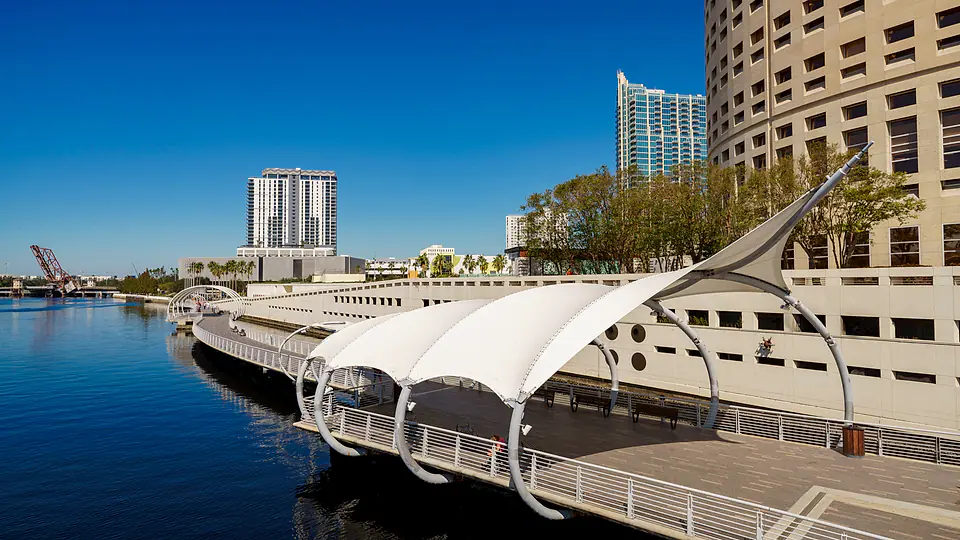
The Tampa Riverwalk winding along the Hillsborough River downtown

If a storm, a burst pipe, or a failed repair has damaged your Tampa property and the insurer or the contractor is not making it right, you are in the right place. We represent property owners across Hillsborough County, the City of Tampa and the unincorporated communities around it, in disputes with insurance carriers, builders, and contractors. Contested property cases here are filed in the Thirteenth Judicial Circuit, and civil matters are heard downtown at the George E. Edgecomb Courthouse on East Twiggs Street. Under Fla. Stat. § 34.01, disputes over $50,000 go to that circuit court; smaller ones are heard in county court. The initial consultation is free, and we will tell you plainly whether you have a claim worth pursuing.

Cory Cannon is built on a construction foundation, and that foundation is local. I am a Florida attorney who grew up around construction in the Tampa Bay area; my family has worked in the Florida construction trades for generations. That is not a slogan; it is how I read a file. I read carrier estimates, engineer reports, and repair scopes line by line, against how buildings in this climate are actually put together, and I check the carrier’s numbers against what licensed local contractors would really charge to do the work. When a case needs engineering proof, we retain independent licensed engineers to provide it. That combination, construction fluency plus litigation, is what this firm is organized around, and Tampa is where it comes from.

How Recent Storms Hit Tampa and Why the Difference Decides Your Claim

Tampa Bay went decades without a direct major-hurricane strike and then absorbed two damaging storms in a single 2024 season. The two did very different things, and the difference is the whole ballgame on an insurance claim.

Hurricane Helene (September 2024) never made landfall near Tampa (its center passed well offshore on the way to the Big Bend) but it pushed a storm surge of five to eight feet into low-lying waterfront neighborhoods. Storm surge is wind-driven seawater forced onto land, and it flooded Davis Islands, where dozens of residents had to be rescued; closed a stretch of Bayshore Boulevard; and gutted the ground floors of historic homes in Palmetto Beach, the working waterfront neighborhood just south of Ybor City. For most of the owners it reached, Helene was a water event.

Hurricane Milton (October 2024) was the opposite. It made landfall to the south near Siesta Key as a Category 3 and spun off one of the largest tornado outbreaks in Florida history, more than a hundred tornado warnings statewide in a single day. Tampa was spared a direct hit but took wind gusts near 100 miles per hour, a flash-flood emergency, and widespread wind and tornado damage. Because Milton passed to the south, it actually pulled water out of Tampa Bay instead of pushing it in, so for most Hillsborough owners Milton was a wind event, not a surge event.

That wind-versus-water line runs straight through your policy. A standard homeowners policy covers wind and windblown rain but excludes flood; flood is covered, if at all, only by separate National Flood Insurance Program or private flood coverage. Carriers know this, and after a season like 2024 they have every incentive to call wind damage “flood,” to push it onto a policy you may not carry, or to treat surge damage as “wind” only up to a low sublimit. Getting the cause of loss right, with photographs, weather data, and, where needed, an independent engineer, is often the difference between a paid claim and a denied one. Our guide to wind-versus-flood claim disputes explains how those fights are won, and our hurricane damage claim and roof damage claim pages cover the two most common Tampa storm losses. If your carrier has already said no, start with our denied claim practice.

Hurricane Ian, in 2022, struck hardest well to the south (Sarasota, Venice, and Charlotte County) and largely spared Hillsborough, so most Ian litigation belongs to those markets. We mention it here only because the deadlines differ: an already-reported Ian claim still carries the five-year window to file suit discussed below.

The FEMA 50% Rule: A Trap Hiding Inside Many South Tampa Flood Claims

If your home sits in a FEMA flood zone (much of South Tampa, Davis Islands, Palmetto Beach, and the Bayshore corridor does), a surge loss can trigger a rule that has nothing to do with your insurance policy and everything to do with what you are allowed to rebuild. Under FEMA’s substantial-damage standard, known as the “50% rule,” when the cost to repair flood damage equals or exceeds 50 percent of the structure’s pre-damage market value (land excluded), the local floodplain ordinance requires the entire building to be brought up to current code, which for a ground-level home usually means elevating it. Both the City of Tampa and Hillsborough County enforce this standard.

Here is the practical trap. A carrier that lowballs your repair estimate can steer you toward a patch-and-repair that ignores an elevation you are legally required to perform, while an honest repair scope may cross the 50% line and require it. The numbers on that estimate are not just about how much you get paid: they can dictate whether you may legally rebuild in place at all. We walk through it in our FEMA 50% rule guide, and it is one more reason the estimate has to be read by someone who understands construction, not just insurance policies.

Why Venue and Local Counsel Matter in Hillsborough County

Where a case is filed is set by law, not preference. Florida splits civil jurisdiction by the amount in dispute: under Fla. Stat. § 34.01, disputes of $8,000 or less go to small claims, $8,000.01 to $50,000 to county civil court, and anything over $50,000 to circuit court. Most contested property-damage cases (a full-roof denial, a construction-defect repair, a commercial loss) land in Hillsborough County Circuit Civil, which sits in the Edgecomb Courthouse downtown. Knowing the divisions, the local judges’ standing orders, and the county’s e-filing and mediation practices is ordinary competence, but it is competence a firm working these courtrooms has and an out-of-market firm does not.

Local knowledge matters on the construction side too, and in a specific way: permitting in Hillsborough is split between two authorities. Property inside Tampa city limits is permitted and inspected by the City of Tampa; property in unincorporated Hillsborough (much of Brandon, Riverview, Town ‘n’ Country, and the county fringe) goes through Hillsborough County’s building department. Which authority issued the permit, what the inspection history shows, and whether the work was permitted at all are the first facts in most defect and unlicensed-contractor cases, and they live in two different records systems. Knowing which one to pull, and how to read it, is part of the work.

One Property, Two Kinds of Fight: The Insurer and Builder Seam

Most property-damage problems in Tampa sit on a seam. On one side is your insurance carrier, which owes you under a first-party policy, the policy on your own building. On the other is a builder, roofer, or contractor whose work may have caused or worsened the damage. Sometimes the fight is only with the carrier. Sometimes it is only with the contractor. Often it is both (a leak the carrier calls “wear and tear” and the contractor calls “not my scope”), and the owner is left in the middle paying for it.

We work both sides of that seam, which is deliberate:

  • When the dispute is with your insurer (a denial, an underpayment, or a stalled claim), it belongs in our property insurance claims practice. Some first-party claims like these may be accepted on contingency, an arrangement in which the fee comes out of any recovery rather than an hourly bill.
  • When the problem is how the building was constructed or repaired (water intrusion, a failing roof system, structural defects), it belongs in our construction defects practice.
  • When the fight is over a construction contract, payment, delay, or lien on a project, it belongs in our construction litigation practice. Florida’s construction lien law runs on a fast, unforgiving clock: a claim of lien must generally be recorded within 90 days after the last labor or materials are furnished, so if a contractor has liened your Tampa property, or you need to enforce or defend one, read our construction lien page and run your dates through our construction lien deadline calculator without waiting.
  • When the dispute is between businesses (a contractor and a supplier, partners in a firm, a commercial landlord and tenant), it belongs in our business and contract litigation practice. Those matters are usually billed hourly, or shift fees by contract or statute, and we set the arrangement in writing before any work begins.

What ties these together is the reading. Whether the disputed number sits on a carrier’s estimate or a contractor’s change order, we test it against how the work is actually done in this market and what it actually costs here. That habit comes from my construction upbringing, and it is why I can usually tell a defensible estimate from a manufactured one, and prove the difference.

Deadlines Run From the Day of the Loss, Not the Day You Notice

Every property claim in Florida is on a clock, and the clocks are shorter than they used to be. You generally must report a new claim to your insurer within one year of the date of loss, and any supplemental claim within eighteen months. The deadline to file suit for breach of a property insurance policy is five years from the date of loss under Fla. Stat. § 95.11(2)(e). Construction and lien deadlines run on their own, faster schedules. Missing one can end an otherwise strong claim on procedure alone.

Two free tools on this site let you check your own timeline in a minute: the insurance claim deadline calculator for your reporting and suit deadlines, and the insurer response timeline checker, which shows which of the carrier’s statutory deadlines to acknowledge, inspect, and pay have already passed. If your dates are close, do not wait to call.

The Tampa Properties and Owners We See

Our clients are Hillsborough County property owners across the map: waterfront homeowners in South Tampa, Davis Islands, and Palmetto Beach with surge and flood-line disputes; Bayshore and downtown condominium owners and associations facing roof, water-intrusion, and structural claims; owners of newer homes in New Tampa, Westchase, and the Brandon and Riverview growth corridor with builder and defect problems; owners of older bungalows in Seminole Heights and Hyde Park dealing with aging cast-iron pipe and roof-age denials; and commercial owners along Westshore, downtown, and the Ybor and Channel district with larger first-party and construction losses. We meet clients where it works for them (at the property, by phone or video, or by appointment), and we handle venue, filing, and the pre-suit steps Florida requires as part of the representation.

Tampa Property Insurance Claim Guides

If any of that describes your situation, tell us what happened. We will read your documents, tell you where the real dispute sits (insurer, builder, or both), and be straight with you about whether it is worth pursuing.

Courts & Venue for Tampa Property Cases

County
Hillsborough County
Judicial Circuit
Thirteenth Judicial Circuit
Main Courthouse
George E. Edgecomb Courthouse, 800 E. Twiggs Street, downtown Tampa
Where Property Cases Are Filed
Contested property cases over $50,000 are filed in Hillsborough County Circuit Civil at the Edgecomb Courthouse in downtown Tampa; disputes of $8,000.01 to $50,000 go to county civil court, and $8,000 or less to small claims.

Where a case is filed depends on the amount in dispute and who the parties are. We handle venue, filing, and pre-suit requirements as part of every representation.

Property Damage Cases We Handle in Tampa

Condo & HOA Association Lawyer in Tampa Bay

Florida Construction Defect Lawyer

Florida Property Insurance Claim Lawyer

Tampa Business Litigation Lawyer

Tampa Construction Litigation Lawyer

Frequently Asked Questions

Do I need a Tampa lawyer for my property damage claim, or can any Florida attorney handle it?

Any Florida-licensed lawyer can represent you, but local knowledge matters here in concrete ways. Contested property cases in Hillsborough County are filed in the Thirteenth Judicial Circuit and heard at the George E. Edgecomb Courthouse in downtown Tampa, each division with its own judges and standing orders. On the construction side, permitting is split: property inside Tampa city limits goes through the City of Tampa, while unincorporated areas like Brandon, Riverview, and Town 'n' Country go through Hillsborough County's building department, and the permit and inspection history lives in two different systems. A firm that works these courts and pulls these records regularly starts a step ahead.

Where would my property damage lawsuit be filed in Tampa?

It depends on how much is in dispute. Under Fla. Stat. § 34.01, disputes of $8,000 or less are heard in small claims, $8,000.01 to $50,000 in county civil court, and anything over $50,000 in circuit court. Most contested property-damage cases (a full-roof denial, a construction-defect repair, or a commercial loss) exceed $50,000, so they are filed in Hillsborough County Circuit Civil, which sits in the George E. Edgecomb Courthouse at 800 E. Twiggs Street in downtown Tampa. We handle venue, filing, and any required pre-suit steps as part of the representation.

My home flooded during Hurricane Helene but the roof was fine. Will homeowners insurance cover it?

Probably not under a standard homeowners policy. Helene's damage in Tampa came almost entirely from storm surge, wind-driven seawater pushed onto land, which flooded Davis Islands, Bayshore Boulevard, and Palmetto Beach. A standard homeowners policy covers wind but excludes flood, and storm surge is treated as flood. Flood damage is covered, if at all, only by a separate National Flood Insurance Program or private flood policy. The exact cause of loss controls, so if a carrier is calling wind damage 'flood' to deny it, that classification is worth challenging. Our wind-versus-flood claim disputes guide explains how.

Hurricane Milton damaged my roof and windows with wind. Is that a different kind of claim than a flood claim?

Yes, and the distinction is important. Milton hit Tampa mainly as a wind event (gusts near 100 miles per hour, tornadoes, and windblown rain) because the storm passed to the south near Siesta Key and actually pulled water out of Tampa Bay rather than pushing surge in. Wind and windblown-rain damage is what a standard homeowners policy is built to cover, though hurricane losses usually carry a separate percentage hurricane deductible. If your carrier denies or underpays wind damage by blaming age or wear, that is a coverage fight our hurricane damage and roof damage claim pages address directly.

My South Tampa house is in a flood zone. What is the FEMA 50% rule and how does it affect my claim?

The FEMA 50% rule, formally the substantial-damage standard, says that when the cost to repair flood damage equals or exceeds 50 percent of your structure's pre-damage market value (excluding the land), the local floodplain ordinance requires the whole building to be brought up to current code, usually meaning it must be elevated. The City of Tampa and Hillsborough County both enforce it. It matters to your claim because a lowball repair estimate can steer you toward a patch that ignores a legally required elevation, while an honest scope may cross the 50% line and require it. The estimate does not just set your payment; it can decide whether you may rebuild in place.

A contractor recorded a lien on my Tampa property. How fast do I have to act?

Quickly. Florida's construction lien law runs on a tight clock: a contractor's claim of lien must generally be recorded within 90 days after the last labor or materials are furnished, and a lien must be enforced by foreclosure suit within one year of recording. If a lien has been placed on your property, or you need to challenge one you believe is invalid or inflated, the deadlines and the notice history control the outcome. Start with our construction lien page and run your dates through our construction lien deadline calculator, then call us before a deadline forecloses your options.

How long do I have to file a property insurance claim and lawsuit in Florida?

For most property policies you generally must report a new claim to your insurer within one year of the date of loss and any supplemental claim within eighteen months. The deadline to file a lawsuit for breach of a property insurance policy is five years from the date of loss under Fla. Stat. § 95.11(2)(e). The date of loss is the day the damage happened (for a hurricane, generally the day the storm hit your property), not the day you discovered it. Flood policies issued through the National Flood Insurance Program have their own, shorter federal deadlines. Our insurance claim deadline calculator will run your specific dates.

How much does it cost to hire your firm for a Tampa property claim?

The initial consultation is free, and how the fee works depends on the kind of case. Some first-party property insurance disputes (denials, underpayments, and delays against your own carrier) may be accepted on contingency, meaning the fee is paid only out of any recovery rather than billed by the hour. Construction and business-litigation matters are usually billed hourly, or shift fees to the losing side by contract or statute. Whatever the arrangement, it is set out in a written fee agreement before we begin any work, so you know the terms up front.

Tampa Office

Law Offices of Cory Cannon, PLLC
1512 McKay Bay Ct, Suite 2
Tampa, FL 33619
In-person meetings by appointment

Call (855) 201-2020 for a free consultation.

Get directions on Google Maps

Denied? Underpaid? Call in the big guns.

Free Consultation

Please provide only a brief summary. Do not send documents unless I request them.

On contingency matters, no recovery means no fees, costs, or expenses owed. Case costs are advanced by the firm and repaid only out of a recovery. Hourly and flat-fee matters are billed as the written engagement agreement provides.