Construction Litigation Attorney
Tampa Construction Litigation Lawyer
Written and reviewed by Cory Cannon, Esq.
Published Updated
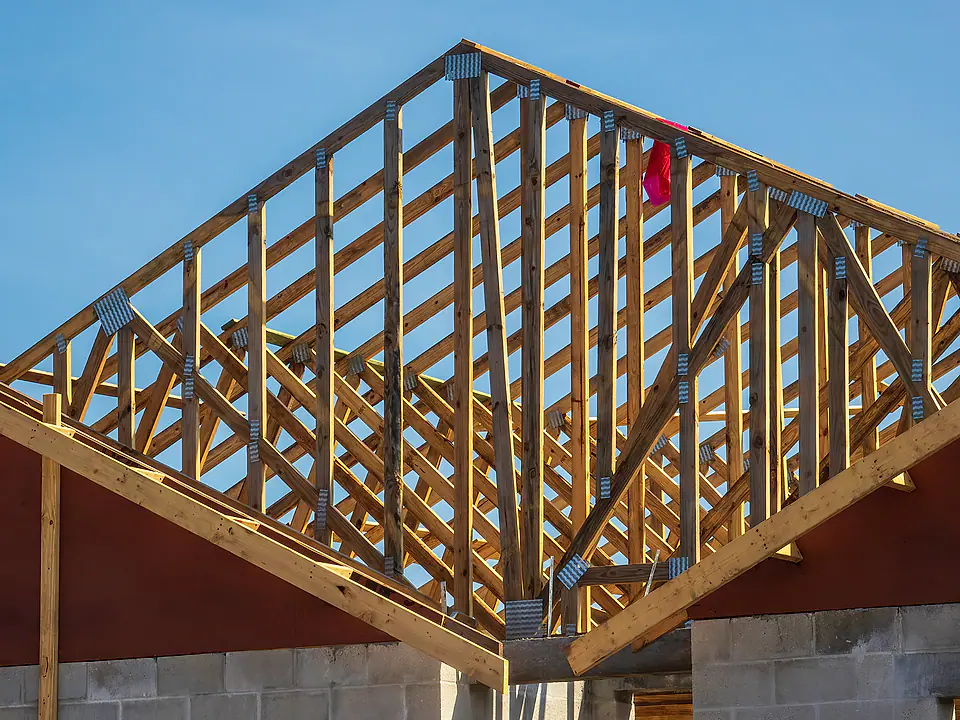
Construction disputes come down to documents and deadlines. Cory Cannon represents property owners, community associations, contractors, subcontractors, and suppliers across Tampa Bay who are asserting payment, lien, contract, delay, and bond claims. My family history in construction informs how I read pay applications, schedules, and scope documents and check the figures against the project record.
This page is the starting point for construction litigation: disputes about money, contracts, and performance on a construction project. If your problem is the defective work itself (a leaking building envelope, a cracked slab, systems that were never built to code), start at our construction defects practice instead. The two areas overlap, and we will route you to the right place either way.
Key Takeaways
- 45 days: deadline to serve a Notice to Owner, measured from first furnishing labor or materials, to preserve lien rights for subs and suppliers not in direct contract with the owner (§ 713.06).
- 90 days: window to record a claim of lien, measured from your final furnishing on the job (§ 713.08).
- 1 year: deadline to sue to enforce a lien, measured from recording; an owner’s notice of contest cuts that to 60 days (§ 713.22).
- 60 / 120 days: Chapter 558 pre-suit defect notice before a claim can be filed (120 days for associations representing more than 20 parcels).
- 7 years: the SB 360 statute of repose generally bars affirmative construction defect claims after the statutory trigger date, even if a latent defect was discovered later. Section 95.11 contains a separate pleading-based window for certain related counterclaims, cross-claims, and third-party claims.
- Prevailing-party fees: the winner recovers reasonable attorney’s fees in lien actions (§ 713.29) and public bond claims (§ 255.05), which raises the stakes for both sides.
These clocks generally run from work dates on the job, not from when payment stops. Verify your specific dates with a lawyer. Every one has exceptions that depend on the facts.
Start Here: Which Side of the Job Are You On?
We bring construction claims. We do not defend them. On a given project that means we represent whichever party is owed money or owed performance: an owner pursuing a contractor, or a contractor, subcontractor, or supplier chasing payment. Working claims from both of those vantage points is an advantage: when we represent an owner we know what the contractor’s file looks like, and when we represent a subcontractor chasing payment we know how an owner’s lawyer will attack the lien. We run a conflict check on every new matter and never appear on both sides of the same dispute.
If you own the property
- Your contractor took a deposit, walked off, or billed for work that was never done. Start with construction contract disputes.
- You found out your contractor is not licensed. Florida law gives you unusual leverage. See our unlicensed contractor page.
- The finished work is defective. That is a construction defect claim, not a litigation-hub matter. Go to construction defects.
- You sit on a condo or HOA board. Association disputes have their own procedural rules. See HOA and condo construction disputes.
If you build for a living
- The owner or general contractor is not paying. Start with construction payment disputes.
- You need to preserve or enforce lien rights. The clocks are unforgiving. See construction liens and run your dates through our lien deadline calculator.
- The job is bonded or public. Public and bonded jobs may rely on payment-bond rights instead of a construction lien. See payment bond claims.
- You did extra work on a handshake. See change order disputes.
- The schedule blew up and everyone is pointing fingers. See delay claims.
How We Work a Construction Case
Every construction dispute we take starts the same way: with the paper. The contract and its exhibits. The pay applications, the itemized monthly requests for payment that track work in place. The change orders, which are the written amendments that adjust scope, price, or schedule. The daily logs, inspection reports, requests for information, and the project schedule. Construction projects generate a documentary record that most other businesses never produce, and the record usually answers the question before a witness ever does.
Then we check the math. If an owner claims a contractor overbilled, we compare the pay applications against the work actually in place, line by line. If a contractor claims it is owed for extras, we trace each item back to a directive, a field condition, or a signed ticket. Where the dispute turns on what work should cost, we test the figures against real bids from licensed local contractors rather than accepting anyone’s spreadsheet at face value. And where the dispute turns on a technical question (whether a structural repair was necessary, whether a delay was driven by design or by crew size), we retain independent licensed engineers and scheduling consultants to answer it.
Most construction disputes settle. Many construction contracts require arbitration, a private process where an arbitrator rather than a judge decides the case. Either way, the cases that resolve well are the ones prepared as if they will be tried, so that is how we build every file. For a sense of the timeline, see our FAQ on how long a construction lawsuit takes.
Disputes We Handle for Property Owners
Contract disputes with your contractor
A common owner-side matter: a contractor who took a large deposit and never mobilized, abandoned the job partway through, billed ahead of the work, or refuses to finish without more money. Florida law imposes specific duties on contractors who take deposits on residential projects, and your contract, even a bad one, usually gives you more rights than you think. We handle demand, termination, and suit, and we are careful about termination in particular, because firing a contractor the wrong way can convert a strong claim into a wrongful-termination counterclaim. Our construction contract dispute page covers the details, and our guide to suing a contractor in Florida walks through the decision step by step.
Unlicensed contractor claims
If the person you hired was required to hold a Florida contractor’s license and did not, the law shifts sharply in your favor. Under section 489.128, Florida Statutes, an unlicensed contractor cannot enforce its construction contract; it generally cannot sue you for payment or enforce a lien under that contract. Separate statutes expose unlicensed contractors to enhanced damages, and in some fact patterns a deposit taken with no intent to perform supports stronger claims still. The practical problem is usually collection, not liability, and we are candid about that. Our unlicensed contractor page explains the remedies and their real-world limits.
Liens recorded against your property
A construction lien is a recorded claim against your property’s title for unpaid labor, services, or materials. A lien can be valid even if you already paid your general contractor: that is the trap in Florida’s lien law, and it is why the paperwork owners receive during a project matters. But liens are also fragile. Lienors must follow chapter 713’s notice and recording rules precisely, and an owner can force the issue: recording a notice of contest of lien cuts the lienor’s time to sue from one year to 60 days. Exaggerated liens carry their own exposure for the lienor, and an owner hit with a fraudulent or inflated lien has an affirmative claim under section 713.31. Contractors and suppliers enforcing a valid lien start with our construction lien page and, once a foreclosure suit is filed, our lien foreclosure page.
Performance bond claims
A performance bond is a surety company’s promise to step in (by completing the work or paying for its completion) if the contractor defaults. Owners and general contractors who hold performance bonds often assume the bond is easy money after a default. It is not. Sureties enforce the bond’s conditions strictly: formal declaration of default, proper termination, notice in the required form, and an opportunity for the surety to exercise its options. Miss a condition and the surety may deny the claim outright. Our performance bond claims page covers how to position a default so the bond actually responds.
Condo and HOA construction disputes
Association boards face construction disputes with a second layer of rules on top: governing documents, membership votes, statutory pre-suit procedures, and fiduciary duties to the members writing the checks. When an association’s dispute involves defective work, chapter 558’s pre-suit notice process applies with longer timelines: an association representing more than 20 parcels must serve its notice at least 120 days before filing suit. We represent boards in disputes with contractors over repair and restoration projects, milestone-driven structural work, and vendor performance. See our HOA and condo construction dispute page, or, for defect claims against a developer or builder, the association pages under construction defects.
Disputes We Handle for Contractors, Subs, and Suppliers
Construction liens
Florida’s construction lien law, chapter 713, is the strongest collection tool in the industry and the easiest one to lose. If you are not in a direct contract with the owner, you must serve a Notice to Owner, a statutory form telling the owner you are on the job, before starting or within 45 days of first furnishing labor or materials, and in any event before the owner makes final payment. The claim of lien itself must be recorded within 90 days of your final furnishing. Then you have one year from recording to file suit, a period the owner can cut to 60 days. Each of those clocks is jurisdictional in effect: miss one and the lien is gone regardless of how much you are owed. Our construction lien page covers perfection and enforcement, our Notice to Owner guide explains the form itself, and our lien deadline calculator maps your dates.
Lien foreclosure
Recording a lien is leverage; foreclosing it is collection. A lien foreclosure is a lawsuit asking the court to sell the liened property to satisfy the debt, and in practice it is the step that forces owners and lenders to engage. Florida law adds a sharp incentive on both sides: under section 713.29, the prevailing party in a lien enforcement action recovers its reasonable attorney’s fees from the loser. That fee-shifting makes case selection and early evaluation matter: a marginal lien can cost more than it collects. Our lien foreclosure page covers the suit itself, priority fights, and transfers of the lien to a bond.
Payment disputes and retainage
Not every receivable has lien rights behind it, and not every payment fight is worth a foreclosure. We handle the full range of collection disputes: unpaid invoices and pay applications, disputed back-charges, withheld retainage (the percentage of each progress payment held back until project completion), and supplier account claims. On private projects, section 715.12, Florida’s Construction Contract Prompt Payment Law, adds interest at the statutory judgment rate plus 12 percent per year on amounts wrongfully held past its deadlines; public work has its own prompt-payment regime. Before you sign anything to get a check released, read our FAQ on lien waivers: a mismatched waiver can release more than the payment covers. Details on our construction payment dispute page.
Payment bond claims
On bonded private projects under section 713.23, and on public projects under section 255.05, where liens against public property are not available at all, your remedy is a claim against the general contractor’s payment bond, a surety-backed guarantee that subs and suppliers get paid. Bond claims have their own notice chain, with 45-day and 90-day notice windows measured from first and final furnishing, and a one-year deadline to sue. The windows differ from lien deadlines just enough to trap contractors who assume the rules are the same. Our payment bond claim page lays out both regimes, and the deadline calculator covers bond notices alongside lien dates.
Change order disputes
Almost every construction contract says changes must be in writing and signed before the work is performed. Almost no project actually runs that way. Work gets directed in the field, priced later, and disputed at the end, and the contractor holding a stack of unsigned change orders is told the contract bars payment. Florida law recognizes several paths around that result, including waiver of the writing requirement by the parties’ conduct and claims for extra work directed outside the contract’s scope. The evidence is everything: directives, emails, daily reports, photographs, and pricing records. Our change order dispute page explains how these claims are built and defended.
Delay claims
Delay disputes run in both directions. Owners assess liquidated damages (a per-day amount the contract fixes in advance for late completion), and contractors claim extended general conditions, acceleration costs, and lost productivity when the delay was caused by the owner, the design, or another trade. These cases are won on the schedule: who owned the critical path, which delays were concurrent, and what the contemporaneous records show. That is technical work, and where the analysis warrants it we retain independent scheduling consultants to do it properly. Whether you are an owner assessing delay damages or a contractor pursuing extended costs, start with our construction delay claim page.
The Chapter 558 pre-suit process
Before an owner or association can sue for construction defects in Florida, chapter 558 requires a pre-suit notice process: the claimant serves the contractor or builder with a written notice describing the defects, and the recipient gets an opportunity to inspect and to respond with an offer to repair, an offer to pay, or a dispute. Getting that notice right matters, because it frames the defect claim that follows and starts the response clock: 60 days for most claims, 120 for associations representing more than 20 parcels. Our chapter 558 guide walks a claimant through the process step by step, and the defect claim itself lives in our construction defects practice.
Florida Construction Deadlines at a Glance
Construction rights in Florida are deadline-driven. The table below summarizes the clocks that decide most of the disputes on this page. Every one of them has exceptions, triggers that depend on facts, and consequences severe enough that you should verify your specific dates with a lawyer rather than relying on a summary.
| Statute | What it governs | The clock |
|---|---|---|
| § 713.06, Fla. Stat. | Notice to Owner: preserves lien rights for subs and suppliers not in direct contract with the owner | Serve before starting work or within 45 days of first furnishing labor or materials, and before the owner’s final payment |
| § 713.08, Fla. Stat. | Claim of lien: the recorded lien itself | Record within 90 days of the lienor’s final furnishing of labor, services, or materials |
| § 713.22, Fla. Stat. | Life of the lien | Suit to enforce within 1 year of recording; an owner’s notice of contest cuts that to 60 days |
| § 713.29, Fla. Stat. | Attorney’s fees in lien actions | No deadline: the prevailing party in a lien enforcement action recovers reasonable fees |
| Ch. 558, Fla. Stat. | Pre-suit construction defect notice and repair process | Serve notice of claim at least 60 days before filing suit; at least 120 days for associations representing more than 20 parcels |
| § 715.12, Fla. Stat. | Prompt payment on private construction contracts | Overdue payments accrue interest at the statutory judgment rate plus 12% per year, beginning the 14th day after payment is due |
| § 95.11(2)(b), Fla. Stat. | Statute of limitations (the deadline to file suit) for written contracts | 5 years from breach (payment-bond claims are excluded; those carry the 1-year deadlines under §§ 713.23 and 255.05 above) |
| § 95.11(3)(b), Fla. Stat. | Statute of limitations for construction defect claims (renumbered in 2023; older sources cite § 95.11(3)(c)) | 4 years, running from the earliest of the temporary certificate of occupancy, certificate of occupancy, certificate of completion, or abandonment of construction; latent defects run from discovery. A 7-year statute of repose generally bars affirmative claims after the statutory trigger. Section 95.11 separately allows certain related counterclaims, cross-claims, and third-party claims within 1 year after service of the pleading to which they relate. |
Two of these deserve emphasis. Lien and bond notice deadlines are measured from furnishing dates on the job, so payment rights may expire while an invoice remains unpaid. Run your dates through our construction lien deadline calculator early. The statute of repose also runs without waiting for discovery of a latent defect. It generally bars affirmative defect claims seven years after the statutory trigger, while section 95.11 provides a narrow pleading-based window for certain related counterclaims, cross-claims, and third-party claims. The actual project records and procedural posture control the calculation.
Who Pays the Attorney’s Fees and What We Charge
Construction is unusual among litigation practices because fee-shifting is common. Many construction contracts contain prevailing-party fee provisions, and several Florida statutes add their own: section 713.29 in lien actions and section 255.05 on public bond claims both award fees to the winner. That changes the economics of every case on this page: a sound claim gets stronger, and a weak claim gets more dangerous, because losing can mean paying the other side’s lawyers. We evaluate the fee exposure in both directions before we recommend filing anything. Our FAQ on who pays attorney’s fees in construction disputes goes deeper, and it sits with the rest of the short answers in our construction litigation question library.
Fee structures depend on the matter. Lien, bond, and payment work may be handled hourly or for a flat fee. Some owner and association recovery claims may qualify for a contingency or hybrid arrangement. The written engagement agreement explains the fee structure, responsibility for costs, and any fee-shifting risk before work begins.
Related Problems, Different Pages
Defective work. If your core complaint is the quality of construction (water intrusion, structural movement, failing systems), that is a construction defect claim against the builder or contractor, including claims under new-construction warranties. Those pages live under construction defects, along with the chapter 558 process from the owner’s side.
Design errors. Claims arising from an architect’s or engineer’s mistakes (drawings that do not work, designs that violate code) are handled on our design defect page.
Insurance disputes. Some construction problems are really insurance fights in disguise: a repair project stalled because the carrier underpaid the loss, or storm damage the insurer attributes to construction flaws. If the party refusing to pay is an insurance company rather than an owner or contractor, start at our property insurance claims practice: different statutes, different deadlines, different leverage.
A Construction Background Applied to the File
I come from generations in the Florida construction trades, and how that upbringing became this practice is the short version of my story. That background helps me examine schedules of values, retainage calculations, daily logs, change orders, and back-charges against the project record. When a claim requires engineering, scheduling, or another technical discipline, the firm retains an appropriately qualified independent professional to perform that analysis.
If you have a construction dispute in Tampa Bay or the surrounding communities, contact us to request a consultation. Bring the contract, the pay applications, and your dates of first and last work on the project. Consultation and fee arrangements depend on the matter.